
The Price of Water in Finistère
On a random library find, a Swedish writer's soul-home, and why words never quite convey what a place means to us.

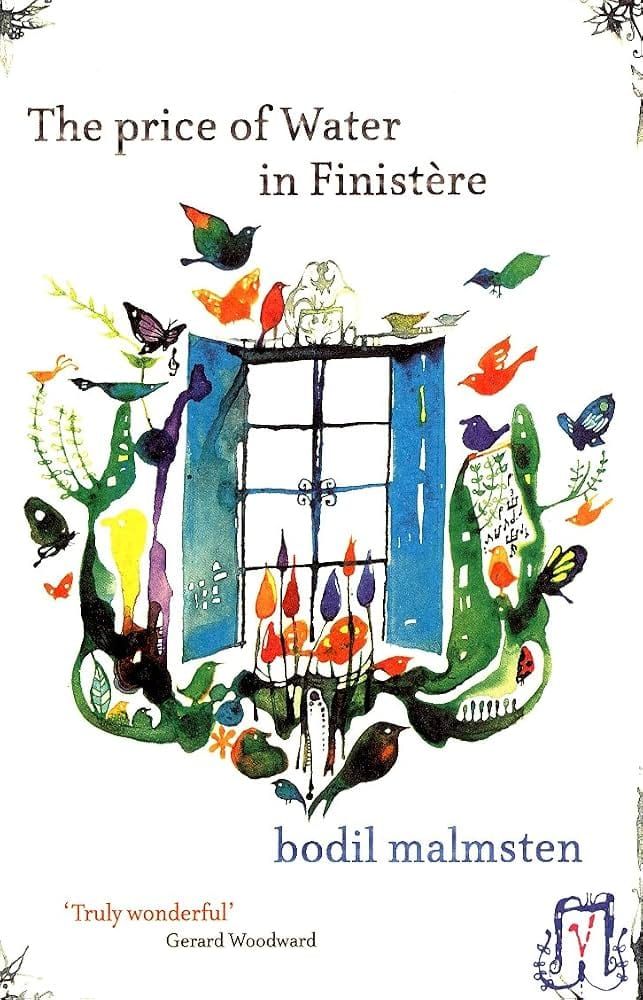
I think everyone wants to have a place they want to call home. As I finish The price of Water in Finistère by Bodil Malmsten this becomes increasingly clearer. Much like someone can have a person they call “the one”, I believe it is much of the same for places. Having some place, that being a village, city, or a whole country, you feel inexplicably connected to is part of being human.
The price of Water in Finistère was a random find as I was browsing the city library of where I live. The cover and title appealed to me, so I took it. Bodil talks about the effect writing things down has on sharing an experience, especially something as potent and powerful as your “forever-place” or “soul-home”. The process of writing diminishes experience. No matter how skilled a writer you are, experience cannot be duplicated using language. It’s too constricting, too vast, meaning a plethora of things for different people. Here, I define meaning as what a person feels during a moment. It sounds simple, but moments cannot be peeled back to reveal their hidden essence. Language and experience, although often used to explicate one and the other, are two parallel lines that get close, but never actually meet.
Okay, so what is my point with these two paragraphs? Reflection, for the sake of reflection and maybe to spark something in the reader, even if negative. Humans are social beings, even throughout a seemingly lonely process, such as writing a book, there is an inherent connection between the reader and the writer, the creator and the recipient. Even if not intended.
Finistère is home for the author, but she struggles to explain why. The words seem insufficient to her, so much so that blank pages would do a better job at describing why Finistère feels like home. For a writer or maybe because of it (or simply because she is an insightful human being) she is very against putting experiences into words. Just letting the experience be is the best course of action and I couldn’t agree more.
Non-duality and non-dual opinions, funnily enough, are at the centre of a lot of conflicts. We struggle to hold opposites and want to, with fervour, defend why one is better than the other. Holding non-dual opinions does not mean that an opinion hasn’t been thought through and formulated. Being in a non-dual space means that we get to interact with the whole of experience without putting up barriers because a given property of something does not align with that other something. We can write because we want to share experiences that are dear to us or that we have resonated with, while being fully aware that the experience we are retelling gets lost in translation. From moment to language. From experience into words.
The place I call home is a place where I feel light, belonging, where every time I wake up, the energy slowly envelopes around me and makes its way to my soul. In this place, I still have worries, sadness, heartbreaks, and disappointments. It still rains and it may even thunder from time to time. The electric bill is still expensive, and I am still careful of not wasting too much water. I guess the place I call home is something like this, but not like this at all.
With Love,
João C.